
Why Do We Crave Certain Foods?
Deep Article4 min read
Reward, habit and sleep loss explain most of it. One real deficiency link explains a small, specific piece — and it isn't the one people usually reach for.
You’re not hungry. You just ate. And yet you can picture the exact food you want — not “something sweet,” but a specific dish, sometimes down to the brand. That specificity is the clue: this isn’t the body asking for fuel. It’s something else entirely, and it usually isn’t what people assume.
Craving isn’t hunger — it’s reward
Hunger and craving run on different systems. Hunger is the body signaling a genuine need for energy. Craving is the brain’s reward circuitry responding to a specific food it has learned to find highly rewarding — and that circuitry can fire whether or not you actually need calories. That’s why a craving can show up minutes after a full dinner: it was never really about needing food in the first place.
This is worth sitting with, because it reframes the whole question. “Why do I want this so badly?” isn’t usually about what the food contains. It’s about how strongly your brain has learned to associate that specific food with reward — which is shaped far more by repetition and context than by nutrition.
How a habit becomes a craving
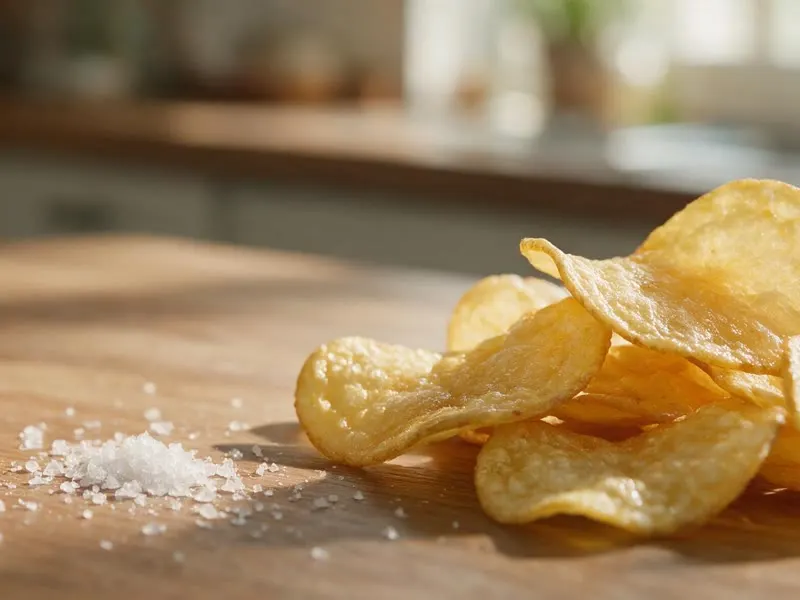
Cravings are frequently built the same way any learned association is built. If you always eat chips on the sofa watching TV, the sofa-and-TV combination itself can eventually start triggering the craving on its own — before you’ve thought about food at all. The brain isn’t tracking a nutrient gap here; it’s completing a pattern it has run many times before.
This is also why cravings cluster around routine: the same time of day, the same location, the same emotional state. Stress and boredom work the same way — not because stressed or bored bodies suddenly need specific nutrients, but because eating a particular food has, in the past, reliably interrupted that state.
What a sleep-deprived brain wants
Sleep loss changes craving through a more direct, physical mechanism — and it’s been mapped. A 2013 study at UC Berkeley scanned participants’ brains after a full night’s sleep, then again after a sleepless one. After sleep deprivation, activity dropped in the frontal and insular cortex — the regions involved in evaluating whether a food is actually a good choice — while activity increased in the amygdala, a region tied to emotional reward response. The measured result: high-calorie, highly palatable foods became significantly more desirable to the same people, in the same brain, in under 24 hours. That’s not “being tired makes you eat worse” as a vague idea — it’s a specific, observable shift in which brain regions are doing the deciding.
Does a craving mean you’re deficient in something?
This is the part worth being precise about, because the popular version of the answer is mostly wrong.
The idea that “craving chocolate means you’re low in magnesium” or “sugar cravings mean adrenal fatigue” is widely repeated and not well supported by evidence. Harvard’s Nutrition Source is direct about this: most everyday cravings track much more closely with habit, emotion and reward than with any specific nutrient gap.
There is, however, one real and well-documented exception: pica, a pattern of craving and consuming non-food substances, including ice — a specific form called pagophagia. In a study of 262 adult outpatients, 45% with iron deficiency or depletion reported pica, and the large majority of those cases involved ice specifically. Among people who were genuinely anemic, 56% reported pagophagia, compared with just 4% of those who weren’t anemic. In 22 of 23 patients, the ice craving disappeared entirely once the iron deficiency was corrected.
That’s a real, measurable, reversible deficiency-craving link — but notice what it isn’t. It’s not chocolate, and it’s not sugar. It’s ice, and it’s iron, and the exact mechanism is still being studied. The specificity of that one exception is exactly why it doesn’t generalize to “your cravings are your body’s shopping list.”
What this actually means
Most cravings are your brain running a well-practiced pattern: reward, habit, context, sometimes sleep debt. A small number, in specific circumstances, point to something physiological worth checking with a doctor — persistent ice craving being the clearest example. The WHO frames healthy eating around adequacy, balance, moderation and diversity, not around treating every urge as a diagnosis.
The craving isn’t a message from your body about what it needs. Almost always, it’s a message from your brain about what it has learned.
Knowing which is which doesn’t make the craving go away. It just means you’re no longer trying to solve the wrong problem.