Why You Should Never Wash Raw Chicken
Deep Article3 min read
It feels like the responsible thing to do before cooking. Food safety agencies say it's one of the riskiest steps in the whole process.
Rinsing raw chicken under the tap feels like basic kitchen hygiene — the same instinct that makes you wash vegetables before you eat them. Research led by food-safety researchers at Drexel University has found that around 90% of people still do it. And yet every major food safety agency that has studied the practice, including the USDA, tells you to stop. Not because it’s pointless, but because it actively makes your kitchen less safe.
Washing doesn’t remove the bacteria — it moves it
The bacteria that matter on raw chicken — mainly Salmonella and Campylobacter — aren’t sitting loosely on the surface waiting to be rinsed off. They’re not removed by water at kitchen-tap pressure, no matter how thoroughly you rinse. Sufficient heat during cooking is what reliably destroys them — more on that below.
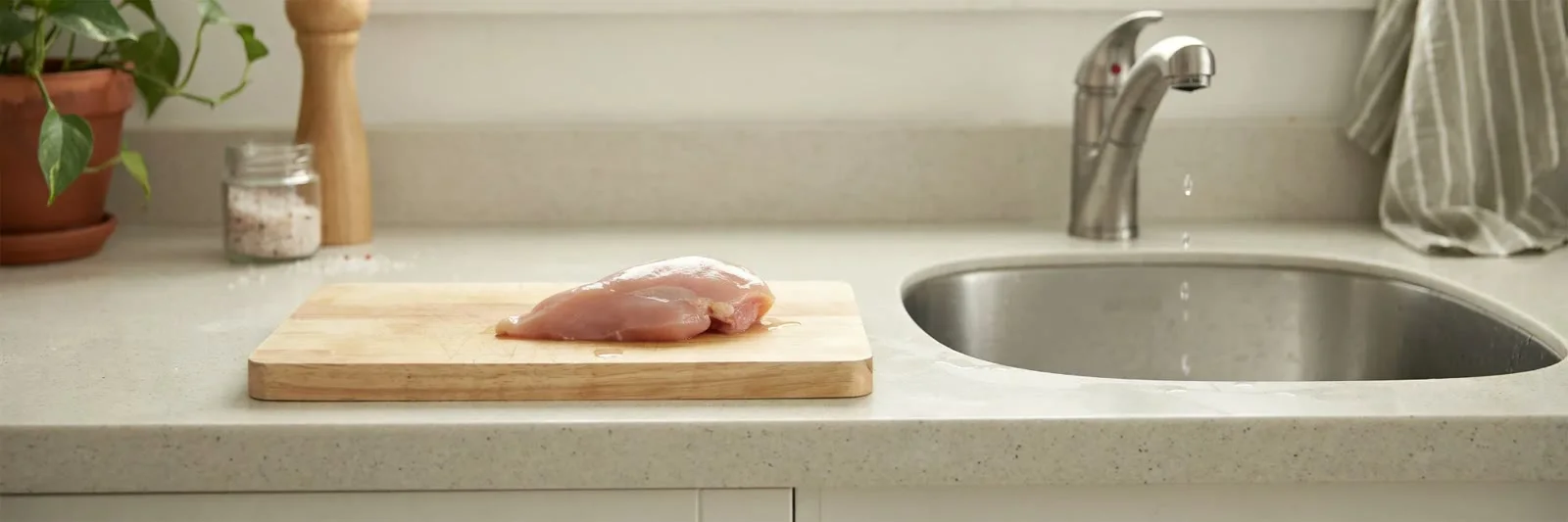
What running water does do is turn a contained risk into a scattered one. A Drexel University study found that rinsing chicken under the tap could spread Campylobacter well beyond the sink itself — onto the counter, the tap handle, nearby dish towels, and anything else within splash range. The water doesn’t clean the chicken; it just gives the bacteria a way to travel.
What happens in real kitchens
This isn’t just a lab finding. Field research into how people actually wash poultry at home found:
- 60% of participants who washed their raw poultry had detectable bacteria in the sink afterward
- 14% still had bacteria in the sink even after they’d cleaned it
- 26% transferred bacteria from the raw poultry directly onto ready-to-eat salad lettuce sitting nearby
That last figure is the one that matters most. The danger of washing chicken isn’t really about the chicken — it’s going to be cooked anyway. It’s about everything else in the splash zone that isn’t going to be cooked: the salad, the cutting board you’ll use for bread tomorrow, the sponge, your hands.
What actually makes chicken safe
Rinsing isn’t a food-safety step at all. The step that actually kills the bacteria is cooking the chicken to a safe internal temperature.
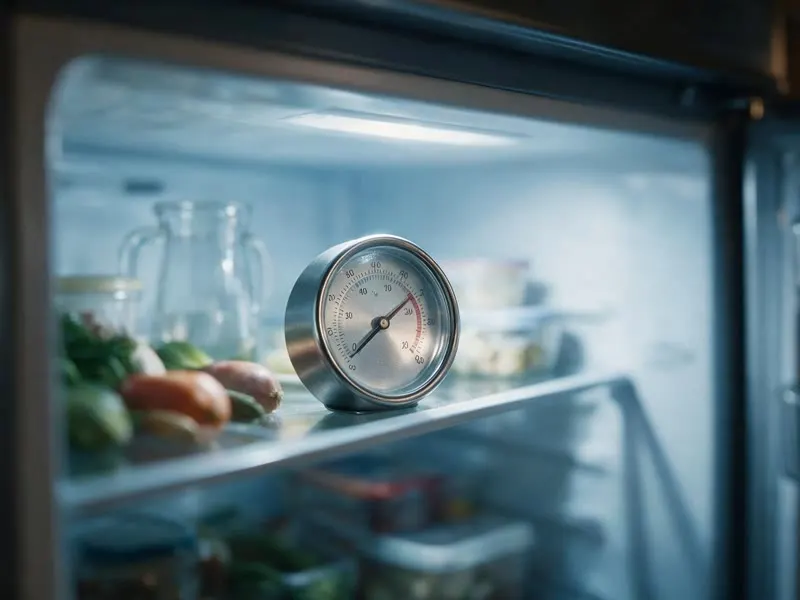
Cooking chicken to a minimum internal temperature of 165°F (74°C) — the USDA’s guidance, checked with a food thermometer in the thickest part of the breast and the innermost part of the thigh and wing — provides a safe endpoint for destroying harmful bacteria such as Salmonella and Campylobacter, regardless of color, texture, or whether the chicken was rinsed beforehand.
How to handle it safely
- Take the chicken straight from its packaging to the pan, oven tray, or cutting board.
- Use a dedicated cutting board for raw poultry. Clean it with soap and water immediately after use; where appropriate, follow with a food-safe sanitizer to further reduce microbial contamination.
- Wash your hands thoroughly after handling raw chicken, before touching anything else.
- Use a food thermometer rather than judging doneness by color or how the juices run.
- Clean the sink and surrounding counter with soap and water after unpackaging raw poultry, even if you didn’t rinse it.
None of this works on chicken that’s already spoiled. If it has an unusual odor, a sticky or slimy texture, or other clear signs of spoilage, rinsing it won’t make it safe — spoilage means throw it out, not wash it and hope.
If washing did nothing, why does it feel necessary?
Because it looks like cleaning. Water running over meat visually resembles the same act that makes vegetables or dishes feel clean — but bacteria on raw poultry aren’t surface grime, and a kitchen tap isn’t a sterilizing tool. The instinct is reasonable. The mechanism just doesn’t work the way it feels like it should.
The risk with raw chicken was never really about the chicken. It’s about the three feet of kitchen around it.
Skipping the rinse isn’t a shortcut — it’s the version of the process that food safety agencies have actually tested. Cook it properly, and you’ll realize the water was never doing the work you thought it was.